01
1917 - 1934
Origins and the Shadow of War
Dietrich Gerstel was born in Berlin during the First World War. His childhood was shaped by intensive medical care, his education unfolded in the Weimar Republic, and his life reached a dramatic turning point with the rise of National Socialism.
Birth and Physical Condition
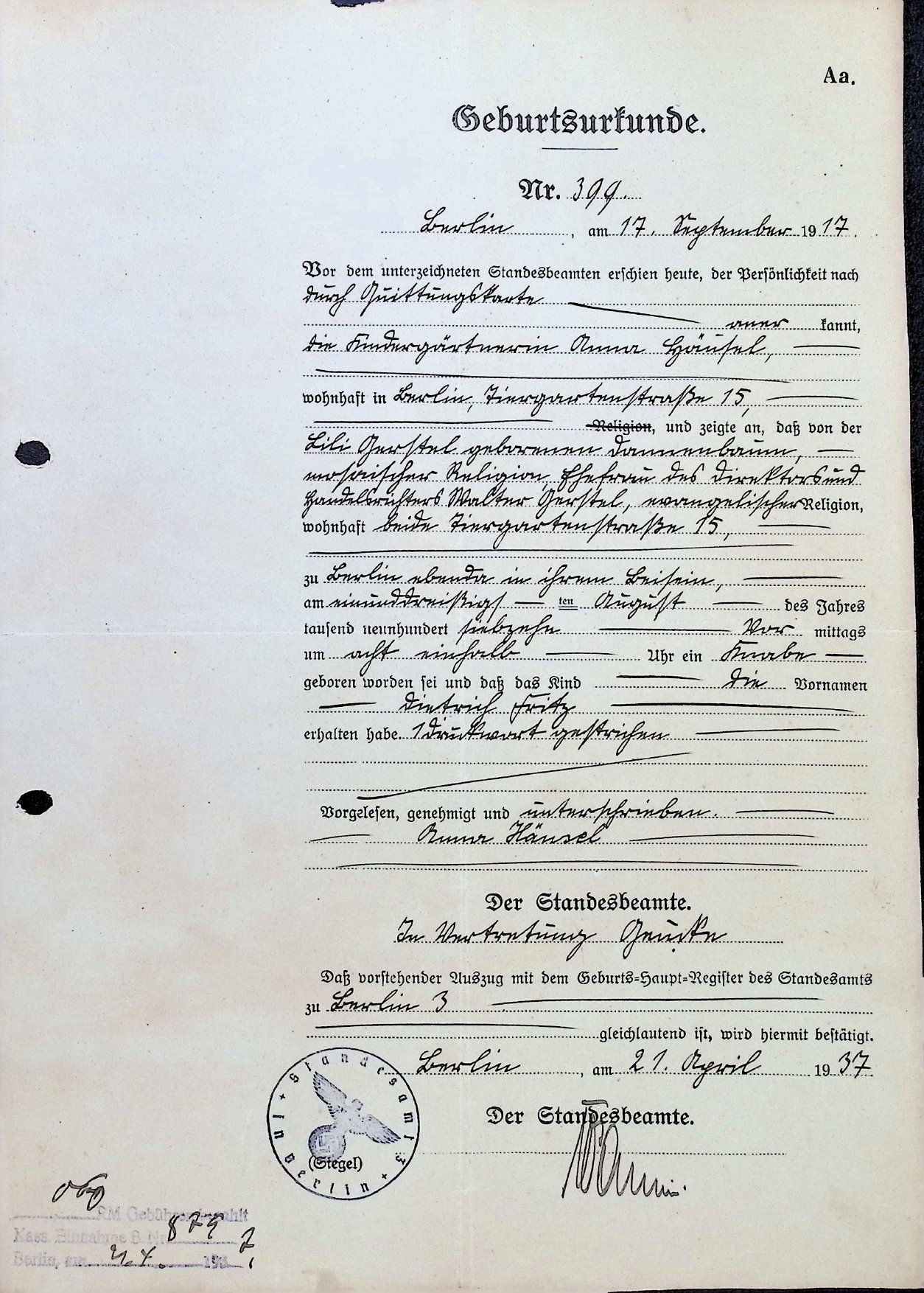
Dietrich Fritz Gerstel Dannenbaum was born on August 31, 1917, in Berlin, Germany, at No. 15 Tiergartenstraße, a prestigious residential area of the capital. He was the son of Walter Gerstel, a prominent engineer and general director of industrial companies such as Permutit A.G., and Lili Dannenbaum, who came from an upper-middle-class family. His birth took place in the context of the First World War, a period of devastation and scarcity in Germany.
Dietrich was born with phocomelia, a severe congenital malformation manifested in the absence of the lower limbs (with only short stumps), the absence of the left arm, and a shortened right arm with a hand of four irregular fingers. In addition, later medical studies revealed that he presented situs inversus, a condition in which the internal organs are arranged on the opposite side of the normal position. Despite these physical conditions, medical reports of the time described him as a healthy child in all other respects.
Medical Treatment and the Oskar-Helene-Heim
From his earliest days, Dietrich’s life was closely tied to cutting-edge orthopedic medicine. He was a patient of Dr. Hermann Gocht, a leading authority in German orthopedics and director of the Oskar-Helene-Heim (OHH), an institution in Berlin-Dahlem dedicated to the care and education of children with physical disabilities.
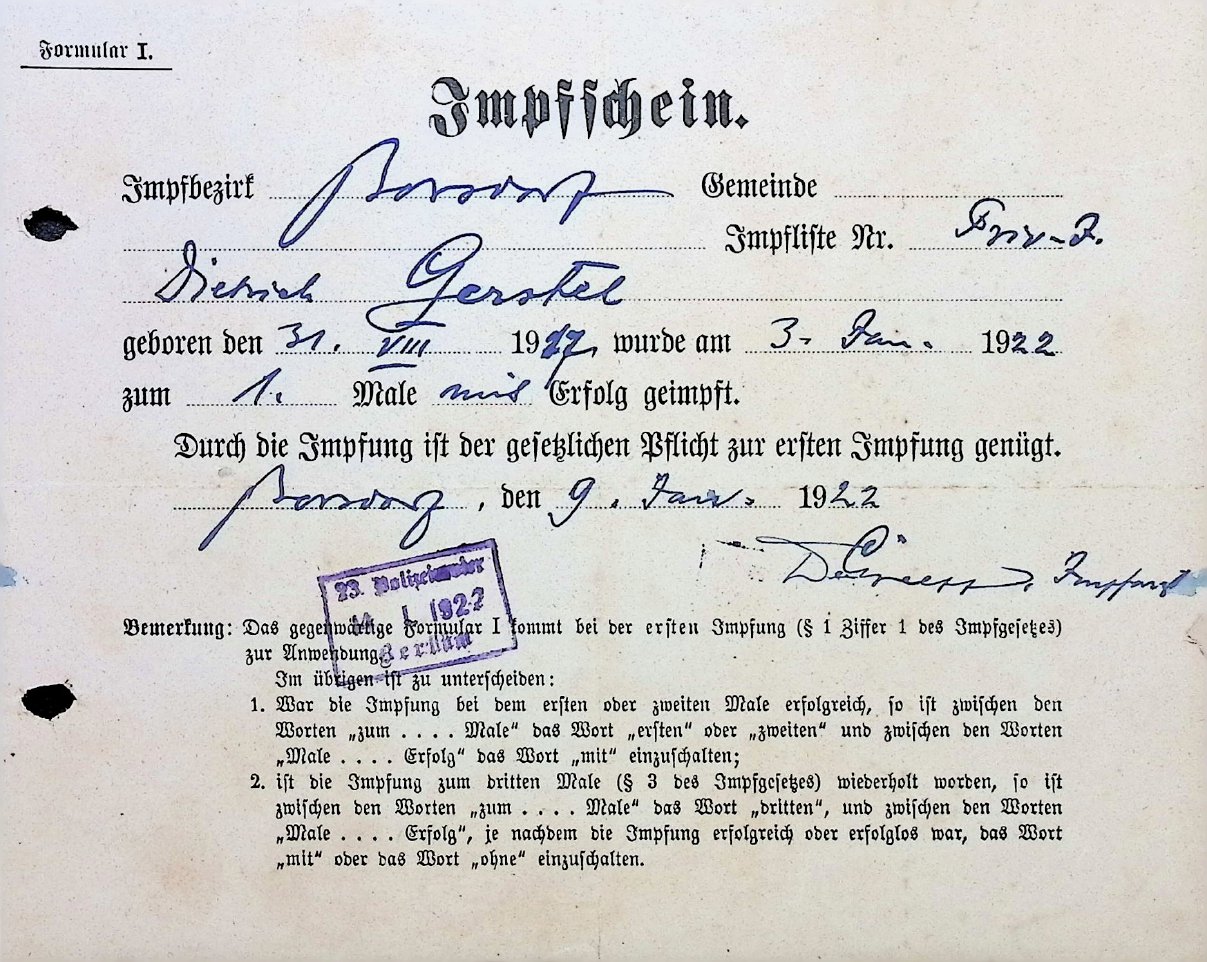
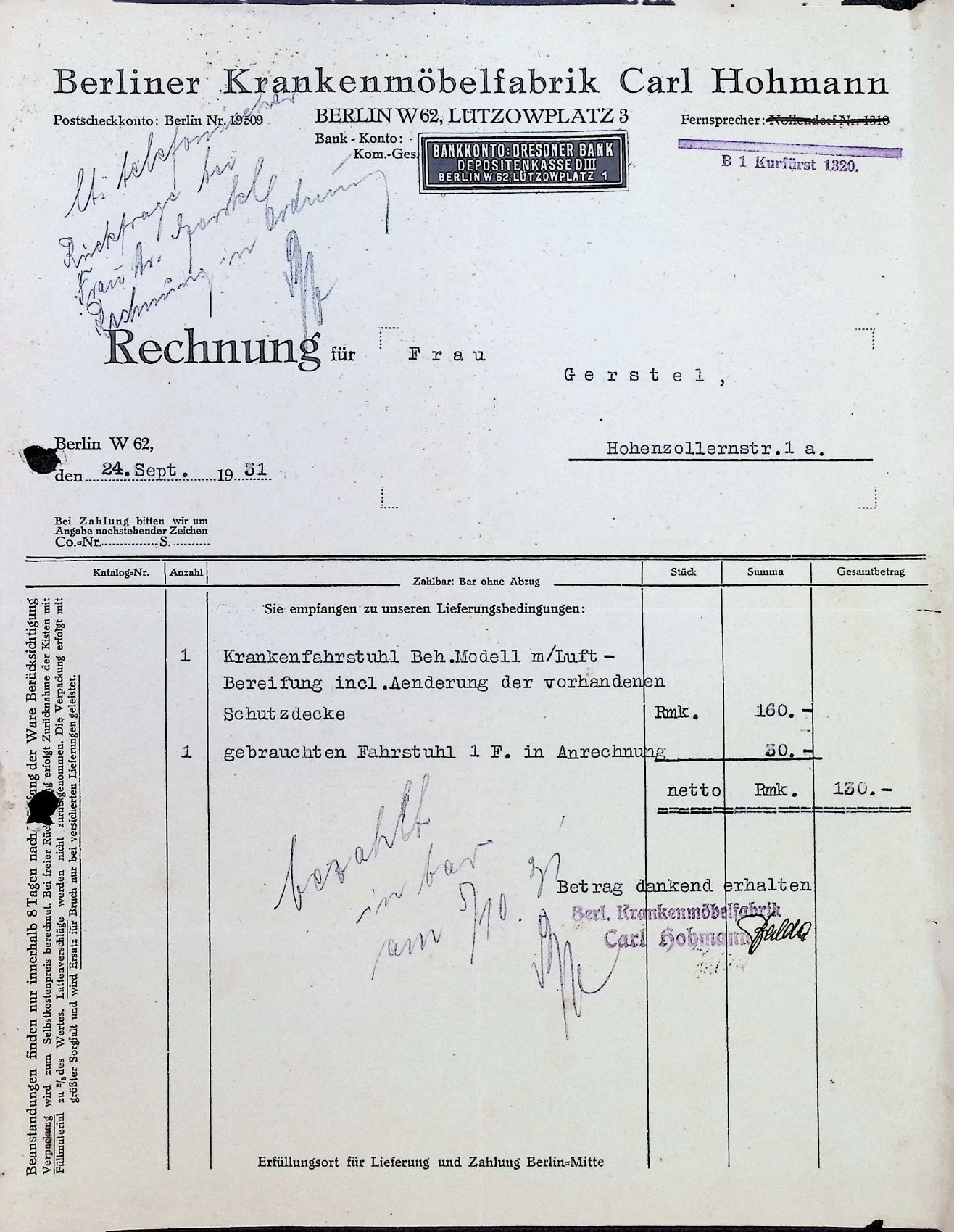
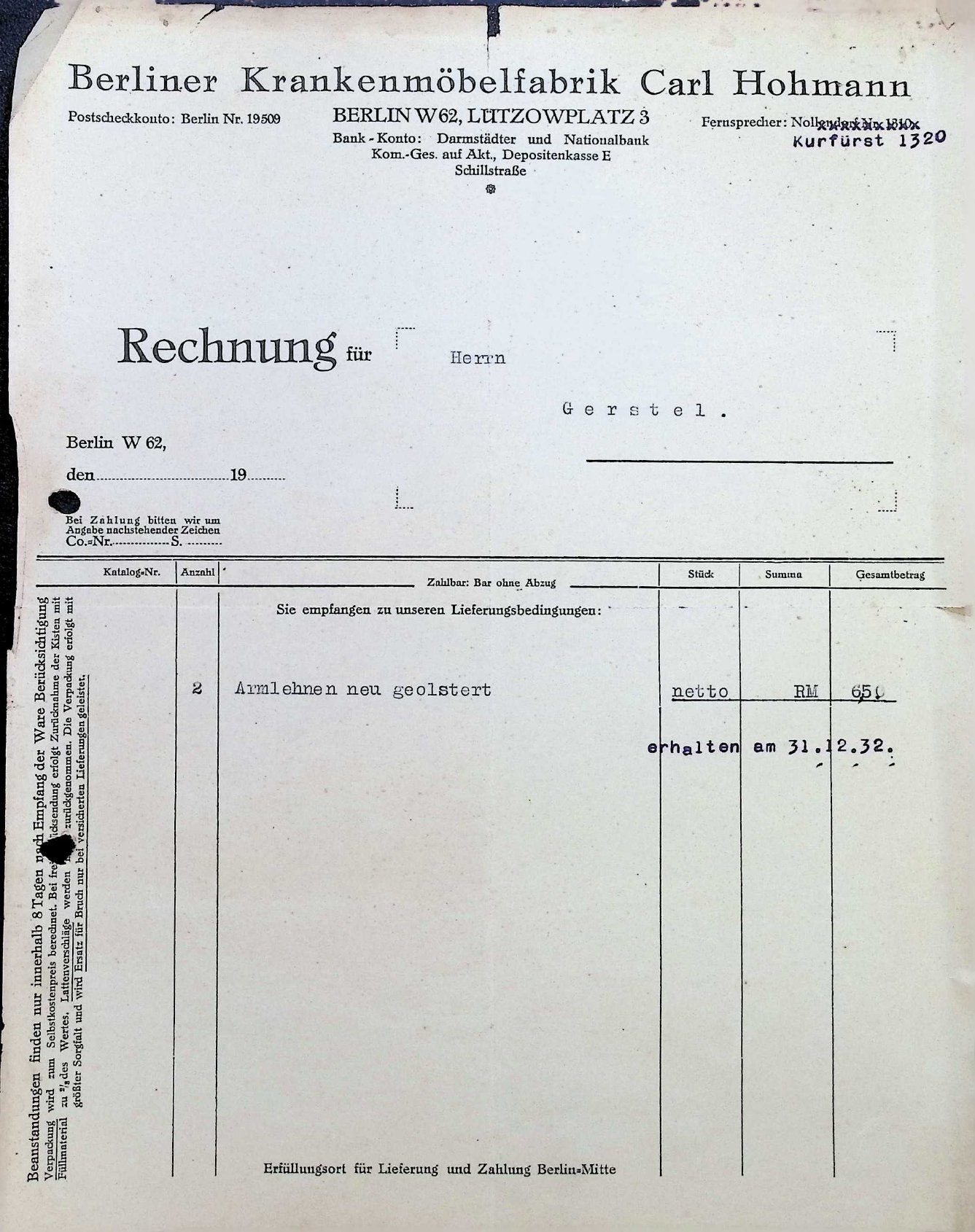
Dietrich spent much of his childhood and adolescence either hospitalized or receiving daily treatment at the OHH. There, complex prostheses were fitted—described as splint devices with leg extensions connected to a corset—that allowed him to stand and walk, though he required assistance to put them on. The Gerstel family continuously financed the maintenance and renewal of these prostheses, as well as the acquisition of specialized wheelchairs with pneumatic tires to support his mobility.
Education and Strategies of Integration
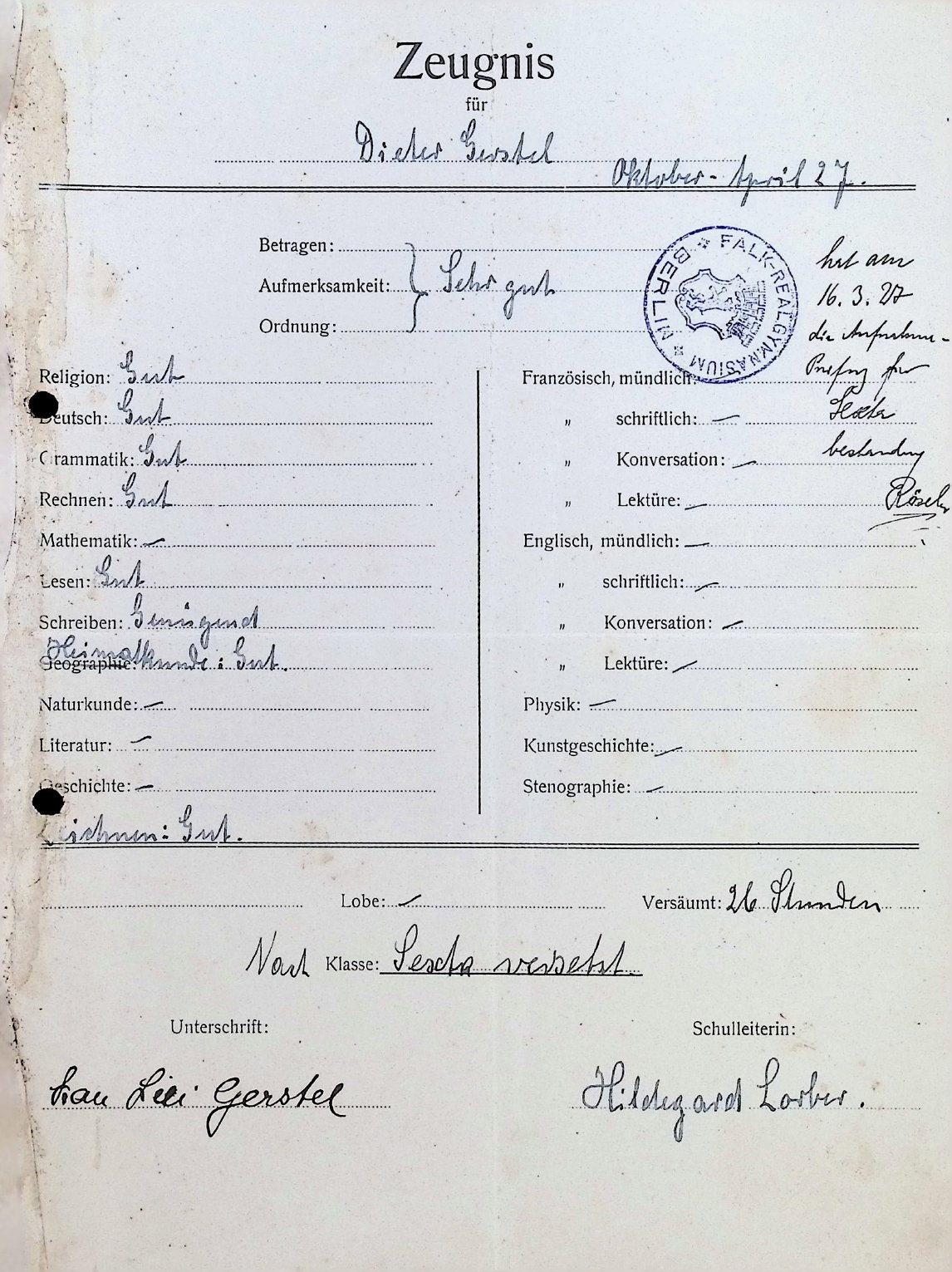
Dietrich’s formal education began with private tutors until 1927. At Easter of that year, he entered the Falk-Realgymnasium in Berlin, a secondary school oriented toward modern sciences and the humanities. His academic performance was remarkable, demonstrating intellectual abilities that compensated for his physical limitations.
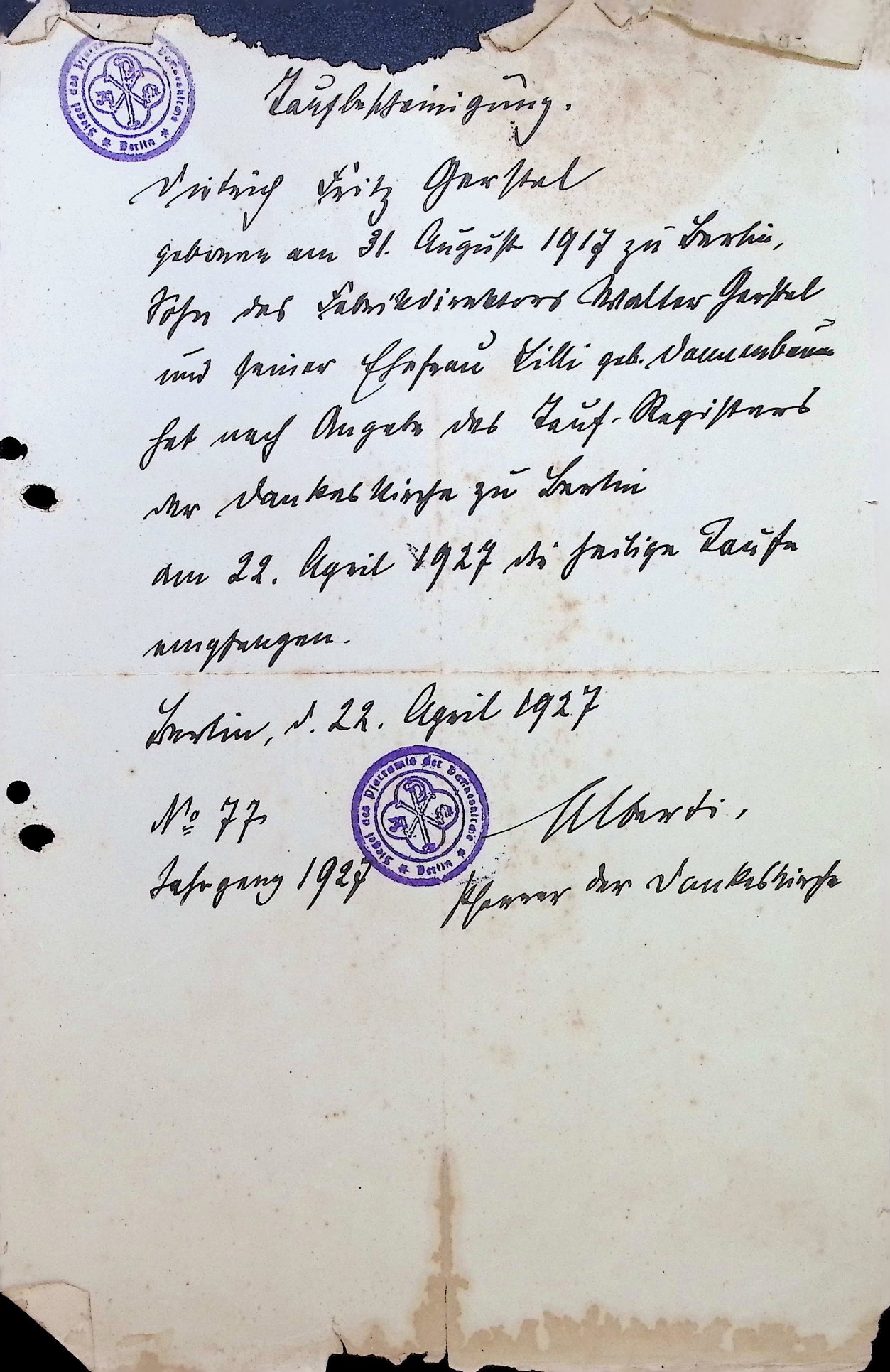
In an effort to protect the family from the growing antisemitism in Germany, his father, Walter Gerstel, decided to have Dietrich baptized into the Lutheran Evangelical faith. The ceremony took place on April 22, 1927, at the Marienkirche (St. Mary’s Church) in Berlin. Although the family was of Jewish origin and his mother, Lili, maintained her religious identity, this act sought to facilitate the child’s social assimilation in an increasingly hostile society.
Announcement of Dietrich’s Confirmation at the Evangelical Parish of St. Matthew
The Collapse of 1933–1934
The rise of Adolf Hitler to power in January 1933 marked the beginning of catastrophe for the Gerstel family. Walter Gerstel, despite his status as a general director and his decorations from the First World War, was persecuted for his Jewish origin. He was removed from his executive positions at Permutit A.G. and other companies, his accounts were blocked, and he suffered temporary arrests.
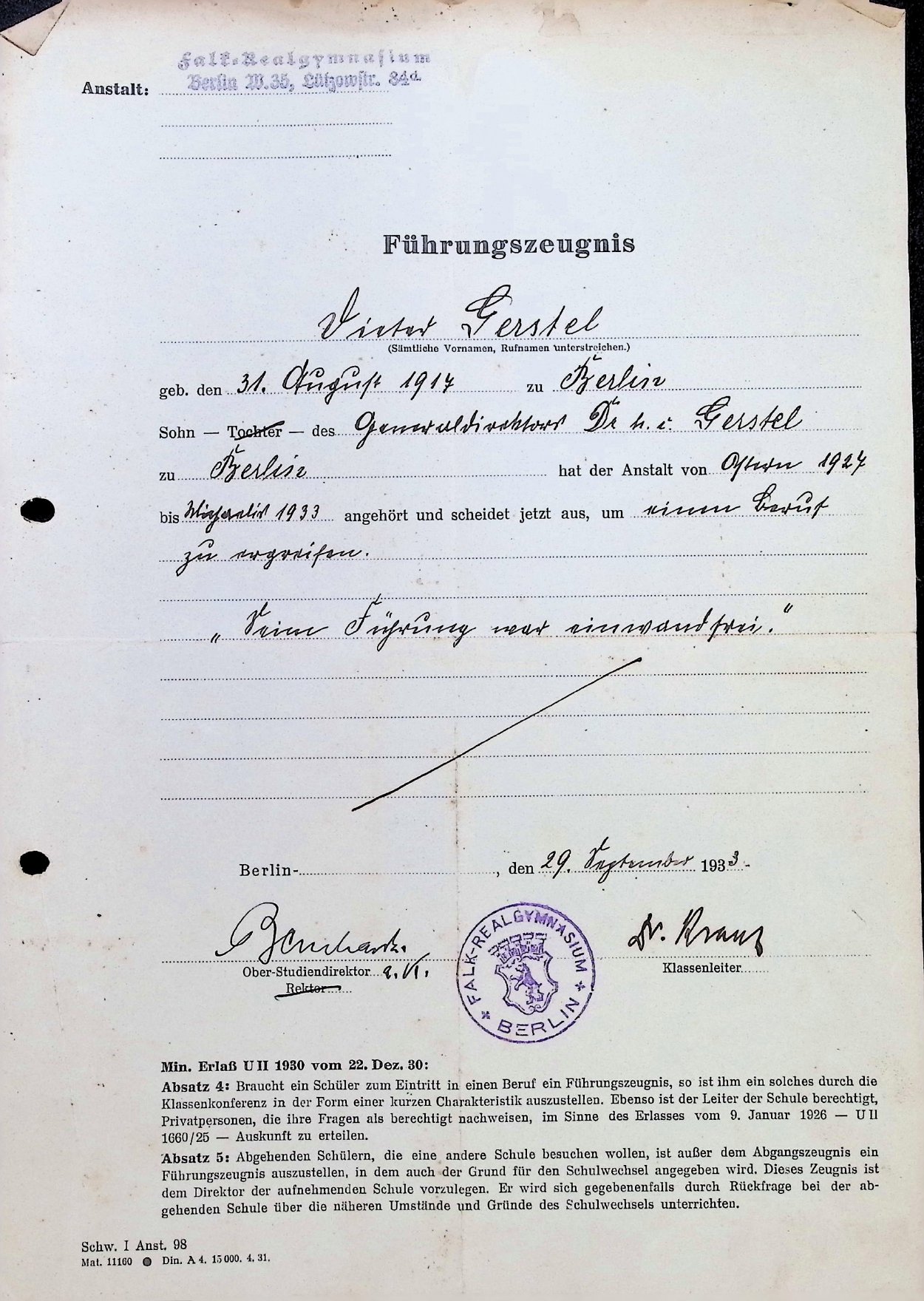
Economic and social pressure became unbearable. The family was forced to abandon their luxurious residence at Tiergartenstraße 25 and move to a more modest home. Dietrich had to leave the Falk-Realgymnasium in September 1933, receiving a certificate of good conduct to begin a professional apprenticeship, as university had become an unviable option for Jews.
On May 24, 1934, Walter Gerstel took his own life in a sanatorium in Garmisch-Partenkirchen. His death left the family in a state of extreme vulnerability, both emotionally and financially. At just sixteen years old, Dietrich was left fatherless and under the care of a mother who now had to confront the dismantling of her family’s assets by the Nazi regime.
Shortly after his father’s death, in June 1934, Dietrich formally entered the Oskar-Helene-Heim as a commercial apprentice, transforming what had long been his place of medical treatment into his center of professional training.
Commercial Apprenticeship Contract. Oskar-Helene-Heim (O.H.H.).
Historical Documents
Birth Certificate
Official record certifying Dietrich’s birth and parentage.
Vaccination Record
Early vaccination certificate documenting the routine medical care Dietrich received.
School Report
Evidence of Dietrich’s admission and performance at the Falk-RealGymnasium. Demonstrates his intellectual abilities and integration into the German educational system.
Baptism Certificate
Conversion to the Lutheran Evangelical faith at the Marienkirche in Berlin. A desperate strategy to protect Dietrich from the growing antisemitism.
Wheelchair Purchase
Invoice from Berliner Krankenmöbelfabrik Carl Hohmann. Evidence of the costs of specialized equipment required for Dietrich’s mobility.
Confirmation Announcement
Evangelical Parish of St. Matthew. Marks his formal integration into the German Protestant community, one year before the Nazi rise to power.
Wheelchair Repair Invoice
Invoice for maintenance of orthopedic equipment. Documents the ongoing care and costs associated with Dietrich’s disability.
Certificate of Good Conduct
Departure from the Falk-RealGymnasium. Marks the forced end of his regular academic education, eight months after Hitler’s rise to power.
Order for a New Wheelchair Model
Request for specialized equipment just two months before Walter Gerstel’s suicide. Reflects the continuity of medical care in increasingly difficult times
Letter from Alfred Gerstel
Written six weeks after Walter Gerstel’s suicide. First testimony of how the family attempted to reorganize after the tragedy.
Commercial Apprenticeship Contract
Commercial apprentice at the Oskar-Helene-Heim under the guardianship of his widowed mother. Transforms his place of medical treatment into a center of professional training.
First World War (1914–1918)
Dietrich was born during the final year of the war, in a Germany devastated by conflict and marked by food shortages.
Weimar Republic (1919–1933)
A democratic period in Germany characterized by cultural effervescence, political instability, and significant medical advances, such as those at the Oskar-Helene-Heim.
Crisis of 1923
Catastrophic hyperinflation in Germany. A loaf of bread cost up to 200 billion marks. The middle class lost its savings.
January 30, 1933
Adolf Hitler assumed the position of Chancellor of Germany, marking the end of democracy. In March, the first antisemitic laws were enacted
Law for the Restoration of the Professional Civil Service (April 1933)
The first law that expelled Jews from public offices and liberal professions. It directly affected Walter Gerstel in his executive positions
1934: Year of Nazi Consolidation
Hitler eliminated internal opposition and proclaimed himself Führer. Thousands of German Jews began to emigrate, although many still believed it would “blow over.”
Jewish Population in Germany (1933)
~500,000 people (0.75% of the total)
Jews in Berlin
~160,000, the largest Jewish community in Germany
Jewish Suicide Rate (1933–1945)
Increased by more than 500%
Phocomelia
Occurs in 1 out of every 100,000 births
Oskar-Helene-Heim
Founded in 1905, pioneer in pediatric orthopedics
Permutit A.G
Contexto Histórico
Primera Guerra Mundial (1914-1918)
Dietrich nació durante el último año de la guerra, en una Alemania devastada por el conflicto y marcada por la escasez alimentaria.
República de Weimar (1919-1933)
Período democrático en Alemania caracterizado por efervescencia cultural, inestabilidad política y avances médicos significativos, como los del Oskar-Helene-Heim.
Crisis de 1923
Hiperinflación catastrófica en Alemania. Un pan llegó a costar 200 mil millones de marcos. La clase media perdió sus ahorros.
30 de enero de 1933
Adolf Hitler asume como Canciller de Alemania, marcando el fin de la democracia. En marzo se aprueban las primeras leyes antisemitas.
Ley de Restauración del Funcionariado (abril 1933)
Primera ley que expulsó a judíos de cargos públicos y profesiones liberales. Afectó directamente a Walter Gerstel en sus posiciones directivas.
1934: Año de consolidación nazi
Hitler elimina oposición interna y se proclama Führer. Miles de judíos alemanes comienzan a emigrar, aunque muchos aún confían en que “pasará”.
Datos Clave
Población judía en Alemania (1933)
~500,000 personas (0.75% del total)
Judíos en Berlín
~160,000, la comunidad judía más grande de Alemania
Tasa de suicidios judíos (1933-1945)
Aumentó más del 500%
Focomelia
Ocurre en 1 de cada 100,000 nacimientos
Oskar-Helene-Heim
Fundado en 1905, pionero en ortopedia pediátrica

